Sewing Needle Tree Embroidery
A Minimalist Holiday Hero for Craft Fair Booths
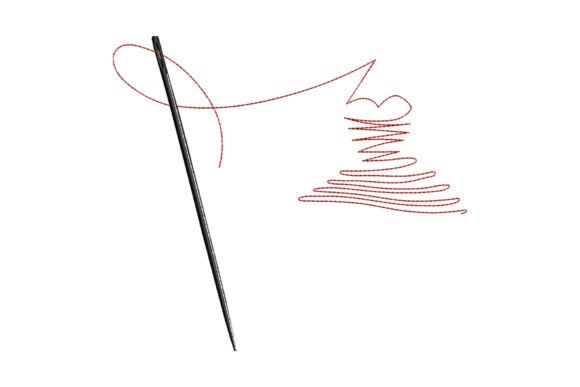
As an embroidery designer who’s prepped over 200 craft fairs—and watched which designs stop foot traffic versus which fade into the background—I’ll say it plainly: Sewing Needle Tree Embroidery lands with quiet confidence. It’s not loud, glittery, or nostalgic in a kitschy way. It’s modern, elegant, and instantly legible as both “sewing” and “Christmas”—a rare dual identity that resonates deeply with handmade shoppers. The continuous red thread forming a tree from a needle? That’s not just clever line art—it’s storytelling in stitch form. Customers don’t just see a tree; they see craft, intention, and seasonal warmth wrapped in one clean silhouette. For Fashion Beauty and Embroidery makers targeting thoughtful buyers—not just holiday decorators—this design feels premium, not promotional.
Where It Shines: Product-by-Product Real-World Testing
I stitched Sewing Needle Tree Embroidery across seven product types for our upcoming winter market booth: canvas tote bags, denim aprons, linen tea towels, cotton twill caps, iron-on embroidered patches, drawstring fabric pouches, and linen pillow covers. Here’s what stood out:
- Tote bag design: At 4.5" wide centered on a natural canvas tote, it reads beautifully from 6 feet away—clean, balanced, and quietly festive. No competing graphics needed.
- Apron embroidery: Placed just above the pocket on a charcoal denim apron, it adds artisanal charm without overwhelming the utility aesthetic. Sewing-themed? Yes. On-the-nose? No.
- Tea towel embroidery: Works best on smooth, tightly woven linens—not textured terry or heavy waffle weaves. On ideal fabric, the line art stays crisp and the red thread pops against cream or oatmeal backgrounds.
- Embroidered patch: A standout. Sized at 2.75", it’s large enough to read clearly but small enough to sew onto jacket collars, backpacks, or gift tags. Customers kept picking up the sample patch to examine the flow of the thread-line.
- Caps and curved surfaces: Requires careful hooping and cutaway stabilizer. The single-line nature helps—but test first on scrap twill. Avoid placing near the crown seam where distortion risks blurring the needle tip or tree apex.
- Fabric pouches & pillow covers: Ideal scale for 3–4" placement. The minimalist style complements modern botanical or neutral home goods—no clashing with existing patterns.
What Makes It Sell—Beyond the Stitch
This isn’t just another holiday machine embroidery design. Its strength lies in contextual clarity. At a craft fair, where attention spans are short and booths are dense, Sewing Needle Tree Embroidery communicates three things in under two seconds: “handmade,” “seasonal,” and “for makers.” That trifecta pulls in Etsy sellers, boutique owners, and creative entrepreneurs who curate meaning—not just merchandise. It also photographs exceptionally well for digital listings: no busy background needed, no retouching required. A single white linen tea towel with the red tree centered? That’s your top-performing Etsy banner image. And because it’s line-based—not filled or shaded—it scales cleanly across sizes, making it highly repeatable for batch production without quality drift.
Careful-Use Notes Every Designer Should Check
Don’t assume this design is universally forgiving. Its elegance depends on execution:
- Dense stitch areas: There aren’t any—this is a true single-run line art embroidery file. That’s a huge plus for speed and thread economy.
- Tiny details: The needle eye and tree tip are delicate. Avoid stitching smaller than 2.25" on textured fabrics or dark thread on dark fabric—contrast is essential.
- Fabric texture matters: Skip heavily napped fleece, bouclé, or thick terry. Stick to medium-weight cotton, linen, denim, twill, or smooth canvas for best definition.
- Dark fabric warning: Red thread on black or navy reads as deep maroon—not vibrant. Test with your exact thread brand and fabric swatch before bulk production.
- Hoop size & stabilizer: Confirm hoop size before digitizing or purchasing—some versions may require 5x7". Use medium-weight cutaway stabilizer for stretchy or unstable fabrics; tear-away works fine for stable wovens.
Design Assets That Build Your Brand—Not Just Your Inventory
When you choose Sewing Needle Tree Embroidery for your handmade product line, you’re investing in more than a seasonal motif—you’re reinforcing a cohesive maker identity. It pairs seamlessly with other minimalist embroidery files (think spools, scissors, or abstract thread loops), letting you build a unified design language across tote bags, aprons, and patches. That consistency strengthens booth display impact and boosts perceived value: customers recognize your aesthetic before they even read your shop name. For Etsy sellers and small shop owners, it’s also a smart printable mockup anchor—use it across lifestyle shots to create visual rhythm in your gallery. Just remember: if you’re selling finished products commercially, verify the embroidery file includes commercial licensing. Never assume a digital embroidery file permits resale of physical goods—always confirm before stitching your first batch.
Final Designer Checklist Before Market Day
- Test Sewing Needle Tree Embroidery on scrap fabric matching your final product—same weight, weave, and color.
- Compare thread colors in natural light: red thread can shift dramatically between brands (e.g., Sulky vs. Madeira).
- Review spacing and stitch density in your embroidery software—ensure no floating elements or jump stitches disrupt the line flow.
- Confirm hoop size compatibility with your machine and intended product placement.
- Create at least one real-world mockup—not just a digital preview—to assess how it reads in person.
- Compare performance across 2–3 fabric colors (e.g., natural, charcoal, oat) to identify your strongest contrast pairings.
- Double-check licensing: is this embroidery file cleared for commercial embroidery and sale of finished products?
Done right, Sewing Needle Tree Embroidery doesn’t just decorate a product—it invites conversation, signals craftsmanship, and quietly says, “This was made by someone who understands both thread and taste.” That’s the kind of detail that turns craft fair browsers into repeat buyers.