Cherry Blossom Branch Embroidery Patter3
A Designer’s First Look: Graceful, Not Overworked
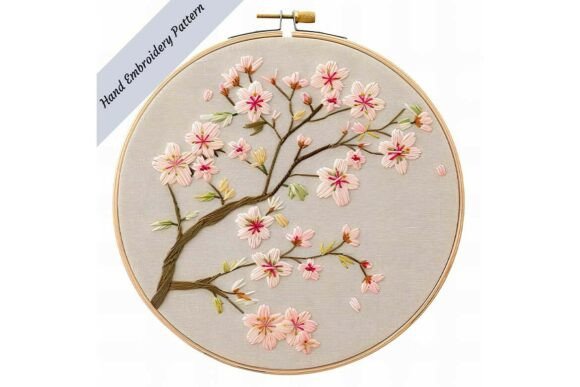
When I opened Cherry Blossom Branch Embroidery Patter3, my eye went straight to the flow—not the florals. This isn’t a tight cluster of blooms jammed into a corner; it’s a single, unhurried branch arcing across the composition, with blossoms spaced like quiet breaths. The leaves taper naturally, and the stems carry subtle weight—enough to ground the design, but not so heavy that it reads as botanical illustration. It feels hand-drawn, not algorithmically generated. That matters. For a craft business owner stitching custom baby onesies or an Etsy seller prepping spring-themed tea towels, this kind of rhythm translates directly into perceived craftsmanship.
Where It Lives Best: Real Projects, Not Just Pixels
I tested Cherry Blossom Branch Embroidery Patter3 on three real items: a medium-weight cotton tote bag, a soft-loop cotton sweatshirt, and a linen pillow cover. On the tote? Stunning—especially with pale pink thread on natural canvas. The branch stretched comfortably across the front panel without crowding the seams. On the sweatshirt, it held up well *with proper cutaway stabilizer*, though I’d avoid placing it directly over the shoulder seam where fabric stretches. The pillow cover was its sweet spot: the design’s gentle curve mirrored the pillow’s edge, and the leaf tips didn’t snag during stitching.
This pattern thrives in products where subtlety reads as intention—not clutter. Think: boutique aprons for café staff, minimalist nursery wall hangings, personalized graduation caps (stitched on the side band), or delicate embroidered patches sewn onto denim jackets. It’s not built for high-contrast branding or bold apparel statements. It’s for the customer who chooses “quiet luxury” over loud graphics—and that’s a valuable niche.
Where to Pause Before Stitching
- Small hoop sizes: The branch length suggests it’s designed for a 5"–6" round hoop. If you’re working with a 4" hoop, expect to crop or reposition—check the original layout before digitizing or tracing.
- Textured or stretchy fabrics: On terry cloth towels or ribbed knit caps, the fine stem lines and blossom centers may blur without precise tension control and lightweight tear-away stabilizer.
- Dark fabric backgrounds: The design relies on delicate contrast—soft pinks against light greens and neutrals. On charcoal or navy, test thread colors first. A warm cream or heather gray thread often reads clearer than stark white.
- Frequent-wash items: Baby onesies or kitchen towels need secure anchoring. Avoid long satin-stitch petals without underlay; reinforce blossom centers with a tiny running stitch anchor if your machine allows.
What It Adds to Your Finished Product—Beyond Pretty
Cherry Blossom Branch Embroidery Patter3 doesn’t just fill space—it adds narrative weight. When stitched onto a linen tea towel gifted at a spring baby shower, it signals care and seasonality without cliché. On a small-batch embroidered patch sold in a local gift shop, it elevates perceived value: customers recognize the restraint in the line work, the balance between negative space and detail. That builds trust—not just in your stitching, but in your curation.
For digital product sellers, this design works beautifully as a printable mockup asset. Its clean outlines and clear branch structure translate well into black-and-white line art previews, helping buyers visualize placement before purchasing. And because it’s rooted in a universally resonant motif (sakura = renewal, transience, beauty), it crosses cultural and generational appeal—ideal for wedding guest favors, graduation gifts, or wellness-branded apparel.
Practical Notes Every Designer Should Check
- Test on scrap fabric first—especially if using textured weaves or blends. Note how leaf edges hold up after washing.
- Review stitch density in your embroidery software. Dense fill areas near blossom clusters can cause puckering on lightweight cotton—consider reducing density by 10% for apparel use.
- Confirm hoop size compatibility before sending to machine. If the file is labeled “round hoop,” verify whether it fits standard 5" or requires a 6" frame.
- Inspect small details at 200% zoom: are blossom centers defined enough for 3mm satin stitches? Can stem lines be cleanly traced at 1.2mm width?
- Try a black-and-white mockup—this reveals contrast issues faster than color previews, especially for Etsy thumbnails.
- Check licensing terms before selling finished items commercially. As a Graphics asset, confirm whether personal use, small-batch production, or resale of stitched goods is permitted.
Final Thought: A Design That Respects the Maker’s Time
What makes Cherry Blossom Branch Embroidery Patter3 stand out isn’t complexity—it’s clarity of purpose. It doesn’t try to be everything. It’s a focused, elegant motif that supports the maker’s intent rather than competing with it. Whether you’re hand-embroidering a personalized gift or digitizing for a client’s boutique line, this pattern gives you room to execute cleanly, finish confidently, and ship something that feels thoughtfully made—not just machine-produced. In a market flooded with overdesigned, low-resolution embroidery files, that restraint is rare. And valuable.