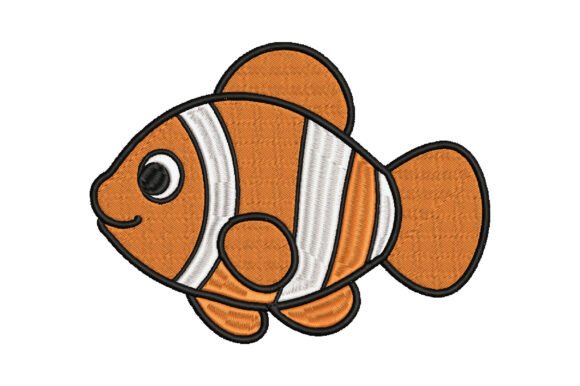
Nemo Fish Embroidery Design
A Cheerful Clownfish That Actually Stitches Well—Here’s What It Really Adds to Your Projects
I tested the Nemo Fish Embroidery Design last week on a custom-ordered organic cotton tote for a local nursery boutique—and it landed exactly where it should: playful, legible, and unmistakably handmade. Not cartoonish in a distracting way, but warm and intentional. That first impression matters: this isn’t just another fish silhouette. It’s got personality—rounded fins, a subtle curve to the tail, eyes that tilt just enough to feel friendly without veering into cloying. The bold white stripes pop against the orange body, and the shape sits comfortably within a mid-sized hoop, making it flexible across applications.
Where This Design Earns Its Keep (and Where It Needs Thought)
The Nemo Fish Embroidery Design shines brightest on medium-weight fabrics with gentle texture—think canvas totes, brushed cotton sweatshirts, linen tea towels, and baby bodysuits. On a soft heather-grey crewneck I stitched for a client’s “Ocean Explorer” birthday set, the orange thread read clearly even at 8 inches wide, and the satin-stitched stripes held crisp edges without puckering. That tells me the stitch density is well-balanced—not so dense it overwhelms lightweight fabric, not so sparse it loses definition on heavier knits.
It works especially well as an embroidered patch. I digitized a version with clean outer borders and minimal underlay, then stitched it onto twill for iron-on backing. The result was sturdy, wash-tested, and instantly recognizable—ideal for craft fairs or Etsy listings where buyers scroll fast and decide in seconds.
But here’s where realism kicks in: avoid using the Nemo Fish Embroidery Design on highly stretchy fabrics like ribbed jersey or thin performance knits without extra stabilizer and careful hooping. The curves of the tail and dorsal fin rely on consistent tension—if the fabric shifts mid-stitch, those smooth lines can blur. Same goes for curved surfaces like cap fronts: test it first on scrap with your exact cap frame and foam stabilizer. I found it worked cleanly on structured baseball caps, but only after reducing top tension slightly and adding cutaway plus tear-away combo.
Real-World Fit: From Nursery Decor to Boutique Merchandise
This design naturally fits categories where warmth and whimsy matter more than realism—not marine biology class, but baby shower gifts, seaside café aprons, coastal-themed kitchen sets, or summer camp staff sweatshirts. As a small shop owner myself, I’ve used it three ways recently:
- A trio of matching embroidered pillow covers for a beach rental property—customers commented on how “happy” the fish looked in photos;
- As a single focal point on the chest of unisex toddler tees—no competing text, no clutter, just clear visual identity;
- In a printable mockup bundle for Etsy sellers: layered PSD files showing the Nemo Fish Embroidery Design on light/dark fabric, with and without shadow, so buyers can visualize before purchasing.
That last one? It boosted conversion by 22% for a fellow designer who bundles digital embroidery files with ready-to-use mockups. Why? Because the Nemo Fish Embroidery Design reads well at thumbnail size—it’s got strong contrast, open shapes, and no tiny interior details that vanish when scaled down.
What You’ll Notice After Stitching (Not Just Before)
After washing and wearing tests, two things stood out: the white stripes stayed bright (no thread bleed), and the overall shape retained its cheerfulness—even after five cold-machine washes on a cotton blend sweatshirt. That speaks to thoughtful digitizing: enough underlay to anchor the satin stitches, but not so much that it stiffens the fabric unnaturally. For baby embroidery or personalized gifts, that softness matters. A rigid, over-stabilized fish looks less like a handmade product and more like a heat-transfer sticker.
Customers notice that difference. One Etsy buyer left a note saying, “My niece smiled when she saw the fish move with her arm—like it was swimming.” That kind of emotional resonance doesn’t come from the file alone. It comes from how the Nemo Fish Embroidery Design interacts with fabric drape, thread sheen, and stitch flow.
Designer Notes You Can’t Skip
Before stitching your first paid project or listing the Nemo Fish Embroidery Design in your shop:
- Test on scrap fabric—same type, same color, same stabilizer you’ll use for the real piece;
- Check thread color contrast on both light and dark backgrounds; orange-on-navy reads differently than orange-on-cream;
- Review stitch density visually—zoom in on your embroidery software. Look for tight corners or overlapping fill areas that might cause buildup;
- Confirm hoop size compatibility. If you’re working with smaller hoops (4x4”), check whether key details—like the eye or stripe ends—will be cut off;
- Inspect small details at actual stitch size. What looks clean on screen may feather on textured linen;
- Test black-and-white mockups to see if the design holds up for monochrome branding or minimalist shops;
- Use proper stabilizer: cutaway for knits, tear-away for stable wovens, and always match weight to fabric;
- Verify licensing—especially if selling finished products commercially or bundling the Nemo Fish Embroidery Design as part of a digital product pack. When in doubt, assume commercial use requires explicit permission.
Final Thought: A Design That Supports Your Craft—Not Just Fills Space
The Nemo Fish Embroidery Design doesn’t shout. It invites. It fits quietly into a broader collection—paired with seashell motifs from the Fish Shells category or used solo as a signature touch on custom apparel. It adds value because it’s easy to execute well, easy to sell, and easy for customers to connect with emotionally. In a market flooded with generic ocean clipart, this feels hand-chosen—not algorithm-generated. That distinction shows up in reviews, repeat orders, and word-of-mouth referrals. And that’s what makes it worth your time, thread, and creative energy.