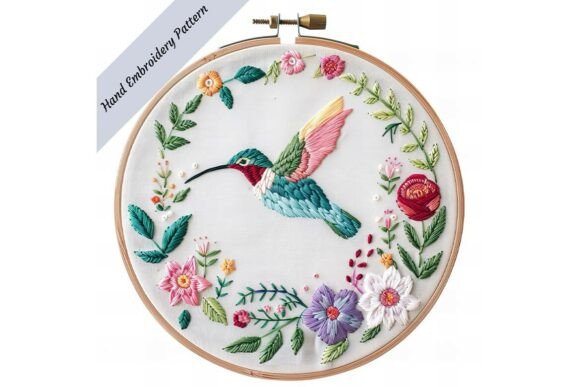
Hummingbird Hand Embroidery Pattern
A Designer’s First Glance: Grace, Not Gimmick
When I opened the Hummingbird Hand Embroidery Pattern, what struck me wasn’t just the vivid feathers—it was the intentionality. This isn’t a cluttered nature motif thrown together for visual noise. The hummingbird is poised mid-hover, wings angled with subtle asymmetry, tail feathers tapering cleanly, and the beak pointing just slightly upward—giving it quiet confidence, not cartoonish charm. As a designer who’s stitched (and rejected) dozens of bird patterns, I appreciated how the layout respects negative space: it’s built for a round hoop, yes—but not in a way that forces awkward cropping or cramming. It breathes. That matters when you’re translating it into a finished product customers will hold, gift, or wear.
Real Project Test: A Linen Tote Bag for a Local Botanical Boutique
Last week, I used the Hummingbird Hand Embroidery Pattern to create limited-edition tote bags for a small shop specializing in native plants and pollinator gardens. We chose natural unbleached linen—textured, soft, and eco-conscious—but also unforgiving for fine detail. Here’s what happened: the wing outlines held beautifully in backstitch, the body’s satin stitch areas landed smoothly *because* the pattern avoids over-ambitious fill density, and the tiny iridescent throat patch? Stitched cleanly in two contrasting threads (teal + violet), it caught light without looking muddy. Customers didn’t just say “cute”—they paused, tilted their heads, and asked, “Is that *realistic*?” That’s the sign of a design that reads as intentional, not decorative filler.
Where It Shines—and Where to Pause
The Hummingbird Hand Embroidery Pattern excels in contexts where elegance and organic warmth matter: baby onesies (soft stitches on Pima cotton), kitchen tea towels (the shape scales well without losing character), nursery wall hangings (its gentle curve fits seamlessly into framed hoop art), and personalized holiday gifts (a single hummingbird on a wool-blend sweater pocket feels special, not generic). It also translates cleanly into an embroidered patch—clean edges, no micro-details that vanish at 3” width.
But here’s where judgment matters: avoid using it on highly stretchy fabrics like ribbed knits without proper cutaway stabilizer—the wingtips and tail feather ends can distort. On dark fabric, test thread contrast early; some vibrant greens or purples in the pattern’s palette may need tone-matched alternatives to stay legible. And while it works beautifully on curved surfaces like caps, keep the placement centered and generous—don’t force it into a narrow front panel where the beak or wing gets cut off. This isn’t a design for ultra-minimalist branding; it asks for room to land with grace.
What It Adds to Your Craft Business—Beyond Pretty Stitches
As an Etsy seller and small shop owner myself, I judge embroidery designs not just by beauty but by business utility. The Hummingbird Hand Embroidery Pattern elevates perceived value instantly: a $28 linen apron becomes a $48 “botanical hostess gift” when this bird anchors the chest pocket. It builds trust—customers recognize care in proportion and flow, not just color splash. For digital product sellers, it’s strong as a standalone graphic or layered into printable mockups (think: flat-lay photos of embroidery kits with botanical labels). And because it’s rooted in nature—not trends—it stays relevant across seasons, holidays, and brand refreshes. No forced “Valentine’s hummingbird” or “Christmas hummingbird” spin needed.
Practical Designer Notes Before You Stitch
- Always test on scrap fabric first—especially if pairing with textured weaves or blends. Linen, cotton-linen mixes, and medium-weight chambray behaved best in my trials.
- Review stitch density visually before finalizing—this pattern avoids dense fills, but zoom in on the throat and wing coverts to confirm no unintentional “thread stacking” that could stiffen delicate areas.
- Confirm hoop size compatibility: it’s designed for round hoops, but check whether your preferred hoop diameter (5”, 6”, or 7”) lets key features—like the full tail extension—sit comfortably inside the frame without trimming.
- Inspect small details in black-and-white: print a grayscale version to assess value contrast. If the beak or eye disappears, adjust thread values—not just hues.
- Use appropriate stabilizer: lightweight tear-away for stable wovens; cutaway for knits or high-drape fabrics.
- Verify licensing before selling finished items or bundling digitally—this is a Graphics-type file, so confirm commercial use rights directly with the creator if reselling embroidered goods or digital embroidery files.
Final Thought: It’s Not Just a Bird—It’s a Signature Moment
In a market flooded with repetitive florals and over-simplified animals, the Hummingbird Hand Embroidery Pattern stands out by honoring craft integrity. It doesn’t shout. It invites closer look. That makes it ideal for makers who want their handmade product to feel considered—not just completed. Whether you’re stitching a one-of-a-kind baby blanket, building a cohesive line of boutique apparel, or designing digital embroidery files for other creatives, this pattern delivers quiet authority. It says, without saying a word: *This was made with attention.* And in today’s handmade economy, that’s the most valuable thread of all.