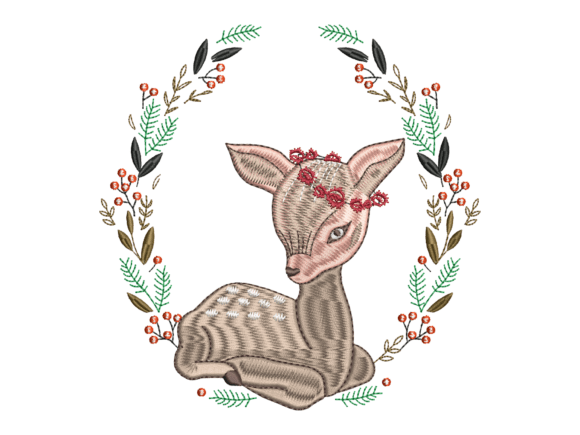
Floral Baby Deer Wreath Embroidery
First Impression: Festive, Soft, and Instantly Recognizable
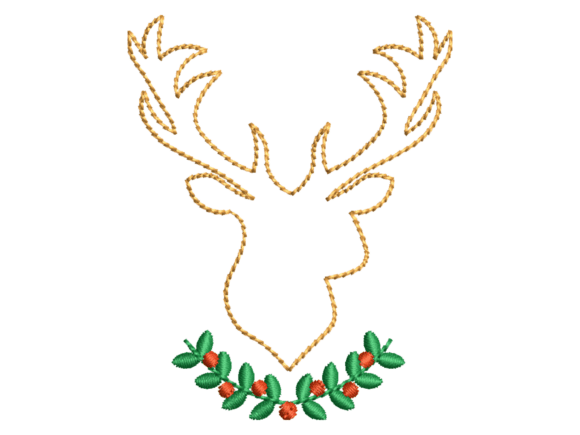
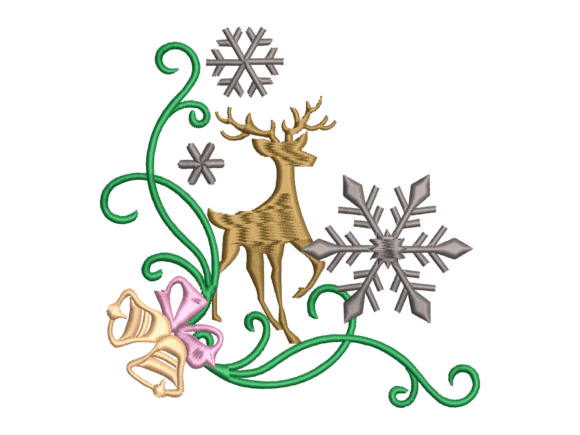
As an embroidery designer who’s prepped over 200 craft fair booths—from snowy holiday markets to sun-drenched spring bazaars—I opened Floral Baby Deer Wreath Embroidery expecting charm. What I got was more: a cohesive, balanced composition that lands squarely between festive and timeless. It doesn’t scream “Christmas” with tinsel or bells—but the wreath framing a delicate fawn, softened by botanical flourishes, reads as joyful, gentle, and seasonally warm. Customers at a busy fair won’t pause to decode symbolism—they’ll feel it. That softness makes it ideal for baby gifts, nursery decor, and gender-neutral handmade products. It’s not rustic, not modern-minimal, not cartoonish—it’s quietly premium, with enough detail to reward close looking but enough clarity to read from six feet away.
Where This Design Shines on Craft Fair Products
In my booth setup—tote bags front-and-center, aprons draped over a ladder shelf, tea towels folded beside embroidered pouches—Floral Baby Deer Wreath Embroidery stood out strongest on three items: small fabric pouches, tea towel embroidery, and embroidered patches. On a 5" x 7" cotton pouch, centered just below the zipper, the design reads as intentional and giftable—not busy, not sparse. On a linen-cotton tea towel (folded with the design visible at the top edge), the wreath’s circular rhythm mirrors the towel’s clean drape, making it feel like part of the product—not an afterthought. As an embroidered patch? It’s a bestseller: iron-on or sew-on, it adds instant handmade credibility to denim jackets, backpacks, or baby blankets.
It works well on aprons too—but only when placed high on the chest pocket or centered on the bib. Lower placements get lost in folds or movement. On caps? Proceed with caution: the wreath’s full shape doesn’t adapt well to curved surfaces unless resized and simplified—check your embroidery file’s scalability before committing to batch production. Tote bag design? Yes—if used as a single focal point on a natural canvas tote (not overcrowded with text or other motifs). Pillow covers benefit most when the design is scaled to fill 60–70% of the front panel—too small, and it disappears; too large, and stitch density risks puckering on lightweight linen.
Practical Production Notes Every Designer Should Check
- Stitch density matters. Floral elements + fine deer features can create tight zones—especially around antlers or inner petals. Always test on scrap fabric matching your final product’s weight and texture.
- Thread colors aren’t specified in the description—so review the included color chart (if any) or assume standard pastel palettes. Contrast is critical on dark fabric: what reads softly on ivory may vanish on charcoal.
- Hoop size isn’t listed, but given the wreath format, expect compatibility with common 4"x4", 5"x7", or 6"x10" hoops. Confirm before digitizing alternate sizes.
- Stabilizer choice is non-negotiable. Lightweight cutaway works best for tea towels and pouches; tear-away suffices for stable cotton aprons. Skip fusible web alone—it won’t support dense floral fills.
- Fabric texture changes everything. A looped terry cloth towel will mute fine details; a tightly woven linen will hold them crisp. Always compare mockups across your intended materials.
Photography, Listings, and Online Conversion
This is where Floral Baby Deer Wreath Embroidery earns its keep for Etsy sellers and digital sellers alike. The design photographs cleanly—even on mobile screens—because of its strong silhouette and balanced negative space. No tiny lettering, no micro-details that blur at thumbnail size. That means your printable mockup will convert: shoppers scrolling fast will register “deer,” “wreath,” “floral,” and “handmade” in under two seconds. For commercial embroidery listings, pair it with lifestyle shots—e.g., the patch sewn onto a vintage-style baby blanket, or the tote bag held by a smiling parent at a farmers’ market. Avoid cluttered backgrounds; let the design breathe.
Why It Builds Booth Confidence and Customer Trust
At a craft fair, attention is fragmented. You have 3–5 seconds to signal quality, care, and intention. Floral Baby Deer Wreath Embroidery does that without shouting. It says “thoughtful gift,” not “trend-chasing.” When customers see it repeated across multiple product types—on a pillow cover, a pouch, and a tea towel—they subconsciously register brand consistency, even if you don’t have a logo. That cohesion builds trust faster than any signage. And because it’s not overly seasonal (despite its Christmas category), it stays relevant through early January gifting, baby showers, and spring nursery updates—extending your inventory lifespan.
Careful-Use Reminders Before You Stitch
Don’t skip these steps—especially if you’re batch-producing for a holiday craft fair:
- Test the embroidery file on scrap fabric *identical* to your final product.
- Check thread contrast on both light and dark base fabrics—you’ll likely need two thread kits.
- Review spacing between elements: tight loops in the wreath or narrow gaps around the fawn’s legs can cause thread breaks or skipped stitches.
- Create at least one real finished product—not just a digital mockup—before ordering bulk materials.
- Compare how the design reads across three fabric colors (e.g., oat, sage, and cream) to guide your product palette.
- Confirm commercial licensing terms—this digital embroidery file permits finished product sales, but verify restrictions on quantity, platform, or attribution.
Final Verdict for Handmade Sellers
Floral Baby Deer Wreath Embroidery isn’t just another machine embroidery design—it’s a versatile, emotionally resonant asset for craft fair sellers, Etsy sellers, and small shop owners building a recognizable handmade product line. It balances delicacy with impact, tradition with freshness, and simplicity with subtle sophistication. Used intentionally—with attention to fabric, stabilizer, and scale—it elevates tote bags into keepsakes, turns tea towels into heirlooms, and transforms patches into conversation starters. In a sea of generic snowflakes and bold typography, this design stands out by being quietly, confidently human. That’s what sells at the booth—and what gets added to cart long after the fair ends.