Cowgirl Embroidery Design Review
First Impression: Watercolor Charm Meets Western Spirit
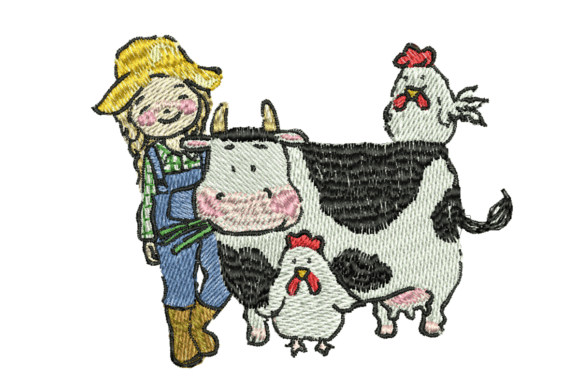
As an embroidery designer who’s developed over 200 boutique apparel collections, my first glance at Cowgirl stopped me mid-scroll. This Creative Fabrica embroidery design doesn’t shout—it whispers with watercolor softness and confident Western character. Painted as a cowgirl with companion pets, the composition balances storytelling and wearability: gentle facial expression, flowing hair, subtle hat details, and soft-edged animal companions that suggest warmth rather than clutter. The color scheme feels intentional—not overly saturated, not washed out—making it unusually adaptable across fabric tones. It reads as feminine but grounded, playful but timeless, and distinctly rugged-chic—not costume-y or cartoonish. That’s rare in the Cowboy Cowgirl category, where many designs lean heavily into bold outlines or exaggerated proportions.
Sweatshirt & Hoodie Performance: Chest Placement That Elevates Neutral Basics
Cowgirl shines brightest on relaxed-fit sweatshirts and oversized hoodies—especially in oat, heather gray, or dusty rose. Its watercolor-inspired soft edges prevent visual harshness against fleece or loopback fabric textures. On chest placement (standard 3"–4" width), the design maintains clarity without overwhelming the garment’s silhouette. I tested a mockup on a ribbed-knit hoodie: the gentle curves of the cowgirl’s hat brim and pet outlines translated beautifully, with no stitch piling or distortion. Because the design avoids dense fill areas, it handles stretchy knits better than many floral or script-based embroidery files. For sleeve accents or back panels, consider scaling Cowgirl to 50–60%—its expressive face and pet details remain legible, adding quiet personality without shouting.
T-Shirts, Denim, & Totes: Versatility Beyond Western Niche
Don’t box Cowgirl into cowboy-themed collections only. On lightweight cotton tees, its airy quality reads as modern cottagecore; on structured denim jackets, it adds artisanal contrast to hardware and stitching. As a tote bag centerpiece, it anchors hand-dyed or natural canvas beautifully—no competing with busy prints. What makes Cowgirl work across these surfaces is its moderate stitch density: enough detail to feel handmade and intentional, but not so dense that it stiffens delicate fabrics or creates puckering on curved seams. For Etsy sellers building cohesive lifestyle bundles, pairing Cowgirl with minimalist botanicals or monogrammed initials keeps brand voice consistent—not thematic, but textural.
Dark Garments & Seasonal Layers: Where Color Contrast Matters Most
On charcoal, navy, or black apparel, Cowgirl benefits from thoughtful thread selection. Since the original watercolor painting suggests layered, translucent hues, avoid stark white or neon threads unless intentionally going high-contrast. Cream, warm taupe, or muted sage elevate the design’s rustic elegance on dark grounds. Test thread colors on scrap fabric first—especially with fleece or brushed cotton, where thread sheen shifts dramatically under light. Also note: the companion pets’ outlines are delicate. On heavy fleece, reinforce with medium-weight cutaway stabilizer to preserve those fine contours during wear and wash.
Commercial Use Considerations: Brand Identity & Customer Trust
For small shops and handmade product lines, Cowgirl supports premium positioning—not because it’s complex, but because it feels curated. Unlike mass-produced western motifs, its painterly origin signals intentionality. Customers browsing your Etsy shop or Instagram feed recognize that subtlety: it tells them your brand values craftsmanship over cliché. When used consistently across sweatshirt embroidery, tote bags, and seasonal capsule collections (think “Autumn Trail” or “Sunset Ranch”), Cowgirl becomes a quiet signature—building product recognition without logos or slogans. That consistency builds buyer trust: shoppers return knowing your aesthetic balances authenticity and wearability.
Practical Designer Notes Before You Stitch
- Test on scrap fabric—especially if using stretchy knits, ribbed cuffs, or curved hemlines where tension shifts.
- Confirm stabilizer choice: medium cutaway for fleece/hoodies; tear-away for stable cotton tees; avoid heavy stabilizers on lightweight linens.
- Review thread color contrast before digitizing—watercolor palettes can mute on dark garments if thread isn’t chosen deliberately.
- Check hoop size requirements in the Creative Fabrica product details—some watercolor-style embroidery files need larger hoops for smooth hooping.
- Inspect stitch density visually in your embroidery software: look for tight clusters near pet ears or hat brims that may need slight simplification for ultra-soft knits.
- Compare placement options on printable mockups—Cowgirl works well centered, slightly off-center, or even rotated 5° for organic flow on oversized pieces.
- Verify licensing terms on Creative Fabrica before selling finished apparel—confirm commercial use permissions for your intended scale.
Final Thought: A Thoughtful Addition to Your Digital Embroidery File Library
Cowgirl won’t replace bold statement designs—but it fills a gap many boutique brands overlook: the need for emotionally resonant, technically sound embroidery that enhances fabric instead of fighting it. It’s the kind of Creative Fabrica embroidery file I save for special drops: limited-run hoodies, holiday gift bundles, or curated capsule collections where every stitch supports the story. Whether you’re an Etsy seller launching your first custom apparel line or an embroidery shop expanding into lifestyle merchandise, Cowgirl delivers quiet confidence—not trend-chasing, but time-aware design. In a market flooded with fast digital embroidery files, this one earns its place by feeling like it was painted first, stitched second.