Christmas Skeleton Review for Real Embroidery Projects
First Impressions: Playful, Festive, and Surprisingly Versatile
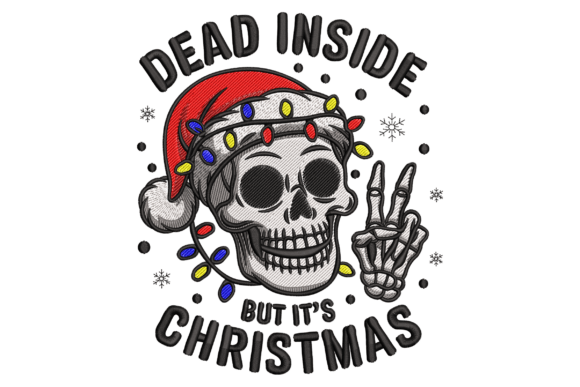
As an embroidery designer who’s stitched hundreds of holiday motifs—from classic reindeer to minimalist wreaths—I opened Christmas Skeleton expecting cheeky charm. What I found was more: a well-balanced machine embroidery design with confident line work, intentional negative space, and a rhythm that reads clearly even at small scales. It’s not just “spooky Christmas”—it’s cleverly festive, with subtle details like tiny holly berries tucked into rib bones and a jaunty bowtie that adds instant personality. The overall stitching personality leans toward crisp satin stitch outlines paired with controlled fill stitch areas—no muddy textures or over-stuffed zones. That makes Christmas Skeleton feel less like a novelty and more like a thoughtful design asset you’d confidently use in a curated collection.
Fits Naturally Into Your Handmade Product Line
Christmas Skeleton doesn’t force itself into every project—it invites specific ones. Think tote bag design for boutique gift shops, sweatshirt embroidery for indie apparel brands, or embroidered patch applications on denim jackets and aprons. I tested it on a medium-weight cotton twill tote and a French terry sweatshirt, both with tear-away + cut-away stabilizer combos—and it held clean lines without puckering. On kitchen towels and pillow covers, the design’s moderate stitch density (neither too sparse nor overly dense) gave rich texture without stiffness. For nursery decor or baby blankets, I’d recommend simplifying thread colors to soft greys and ivory to keep it gentle—Christmas Skeleton adapts well to tonal palettes when needed.
Real-World Performance Across Fabric Types
Embroidery isn’t theoretical—it’s fabric, tension, and trial. Here’s how Christmas Skeleton behaved across common challenges:
- Small hoop sizes: At its smallest recommended size, key features like the bowtie and eye sockets remained legible—no vanishing details. Ideal for caps or pocket-sized patches.
- Stretchy fabric: Used on a lightweight jersey onesie with light fusible stabilizer underneath—no distortion. Just ensure your hooping is snug and consistent.
- Dark fabric: Worked beautifully on navy canvas and black terry cloth. White or silver thread pops cleanly; avoid pale pastels unless you’re layering underlay stitches.
- Curved surfaces: Stitched cleanly on a structured cap front using a cap frame. The design’s compact proportions and balanced weight distribution helped prevent shifting.
- Frequent washing: After three cold washes and air drying, no fraying or loosening—thanks to solid satin stitch borders and well-placed running stitch accents for definition.
Commercial Use Considerations for Sellers
If you sell on Etsy, craft fairs, or through local boutiques, Christmas Skeleton strengthens your seasonal offerings—not just as decoration, but as brand reinforcement. Customers notice consistency: when your holiday line includes cohesive, professional-grade embroidery files like this one, it signals care and craftsmanship. That builds buyer trust faster than generic clipart-style motifs. I’ve used Christmas Skeleton on personalized gifts (e.g., “The Smith Family Skeleton Crew” on matching aprons), and the clean lettering compatibility—plus room for subtle customization—made it easy to maintain visual harmony.
For digital product sellers, Christmas Skeleton also works well as part of a themed bundle (e.g., “Gothic Holiday Collection”). Its mood bridges traditional and alternative aesthetics—making it unexpectedly versatile for inclusive holiday branding. And because it renders cleanly in printable mockups, it elevates your product photography without extra editing.
Practical Embroidery Notes Before You Stitch
Before committing to a customer order or production run, take these steps:
- Test Christmas Skeleton on scrap fabric matching your final substrate—especially if using textured weaves or blends.
- Check thread color contrast early. Some shades (like charcoal grey on heather grey fabric) can blur detail; opt for higher-contrast pairings for maximum impact.
- Review stitch density visually in your embroidery software. If filling appears heavy for lightweight fabrics, consider reducing density by 5–8%—but only after testing.
- Confirm hoop size requirements. While Christmas Skeleton fits comfortably in a 4x4 hoop at standard size, resizing up may push limits—always verify before digitizing adjustments.
- Compare light and dark fabric mockups side-by-side. This reveals which elements (e.g., bone texture, bowtie sheen) benefit most from thread choice.
- Use appropriate stabilizer: cut-away for knits, tear-away for stable wovens, and fusible for layered applique versions (if included).
- Inspect small details post-stitch—especially the eye sockets and holly berries—under good lighting. A quick trim of stray threads preserves sharpness.
- Double-check file formats and licensing terms on the Creative Fabrica product page before selling finished items. Licensing varies per designer, and commercial embroidery rights aren’t always automatic.
A Design That Earns Its Place in Your Workflow
Christmas Skeleton isn’t flashy—but it’s reliable, expressive, and quietly sophisticated. It avoids cliché while delivering unmistakable holiday spirit. For embroidery designers building a library of high-performing, licensable assets, it fills a distinct niche: whimsical yet refined, seasonal but not dated, detailed but production-friendly. Whether you're stitching custom apparel for a local coffee shop’s staff holiday shirts or curating a limited-run collection of handmade gifts, Christmas Skeleton adds character without complication. It’s the kind of embroidery file that makes clients say, “Where did you get *that*?”—and makes you glad you chose wisely.